

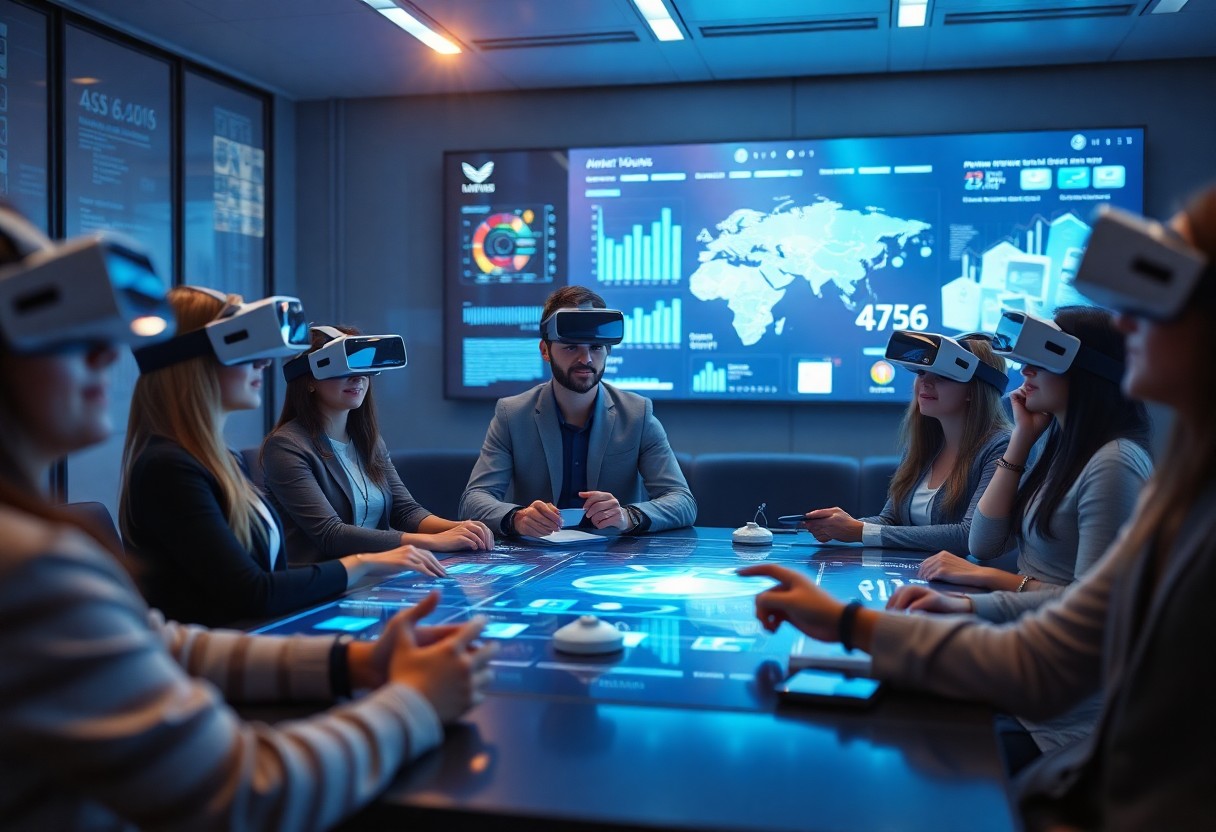

There’s a captivating shift happening in the marketing landscape as artificial intelligence (AI) intersects with virtual reality (VR), creating new avenues for brand engagement and customer experiences. As a marketer, you have the opportunity to leverage these technologies to enhance storytelling and personalize interactions. In this post, you’ll explore how AI-driven insights can optimize your VR campaigns, leading to more immersive and effective marketing strategies that resonate with your audience. Join us as we research into the innovative fusion of these powerful tools in marketing.
Blending Realities: How AI and VR Create Immersive Experiences
The integration of AI and VR reshapes how brands create immersive experiences for their customers. With the power of AI, VR environments become more dynamic, responding to user interactions in real-time and crafting narratives that feel deeply personal. This blend of technologies allows businesses to transform static content into lively, engaging scenarios where consumers feel like active participants rather than passive observers. The result is an enriched context that leads to memorable brand experiences, stretching the boundaries of traditional marketing.
Enhancing Customer Engagement Through Immersion
Immersive VR experiences developed with AI algorithms captivate your audience like never before. By allowing users to explore virtual showrooms or interact with 3D product demos, brands foster deeper connections and engagement. This heightened level of interaction gives you the feeling of being part of a story, increasing the likelihood of lasting emotional bonds with the brand. Engaging your customers in such compelling ways encourages not only brand loyalty but also spontaneous social sharing, amplifying your marketing reach.
Personalization at Scale: The Role of AI in VR Environments
AI-powered personalization in VR is revolutionizing how you connect with your customers. Algorithms analyze user data and preferences in real-time, enabling unique and tailored experiences within a virtual space. This means that as a user navigates through a VR retail environment, the content, offers, and interactions will dynamically shift to align with their tastes and behaviors, making each experience distinctively theirs.
The significance of personalization within VR lies in its ability to create a tailored shopping journey that resonates with individual preferences. Imagine walking into a virtual store where the layout, product recommendations, and even marketing messages adapt continuously based on your previous interactions and current desires. Retail giants, such as Nike, have already begun utilizing this technology, allowing users to customize virtual sneakers in real-time, amplifying customer satisfaction. By leveraging AI analytics, VR experiences become a uniquely engaging canvas, giving you greater insight into customer behavior and preferences at scale, ultimately driving conversions and fostering brand loyalty.1. AI enhances VR personalization for targeted marketing experiences.
2. VR enables immersive brand storytelling powered by AI insights.
3. AI-driven analytics optimize VR campaign effectiveness and engagement.
4. Combining AI and VR boosts customer interaction and retention.
5. AI personalizes virtual environments in real-time for users.
6. VR and AI integration revolutionizes product demonstrations and trials.
The Marketing Power Dynamics: AI-Driven Insights Meets Virtual Landscapes
The fusion of AI-driven insights with virtual landscapes is redefining marketing strategies. Leveraging advanced analytics, brands can better understand consumer behavior, tailoring their strategies to engage more effectively. The immersive nature of VR creates a canvas where these insights can transform user experiences, resulting in deeper emotional connections and heightened brand loyalty. As you engage with this powerful combination, the potential for innovative and personalized marketing initiatives becomes boundless.
Predictive Analytics: Forecasting Consumer Behavior with Precision
Predictive analytics is revolutionizing the way you grasp consumer behavior. By utilizing algorithms and machine learning, brands can forecast trends and shopping preferences with remarkable accuracy. This enhanced foresight allows marketers to craft targeted campaigns that resonate with individual consumer needs, ensuring they are ahead of market demands and can fine-tune their offerings effectively.
Data Visualization in VR: Transforming Complex Information into Engaging Narratives
Data visualization in VR breathes life into complex information, making it more accessible and engaging for your audience. By translating dense data sets into 3D interactive environments, brands can illustrate their stories in a way that stimulates understanding and retention. This transformation captures interest and encourages your audience to explore various scenarios and outcomes associated with your products or services, driving informed decision-making.
Imagine walking through a virtual gallery where each piece of data is represented as a vibrant sculpture or dynamic graph. This immersive experience draws you into the narrative, allowing for an intuitive understanding of trends and stats that might otherwise be overwhelming. With VR as a backdrop, brands can showcase everything from market research findings to sales performances in visually compelling ways. Users can interact with the data, filter it according to their preferences, and even simulate potential future scenarios based on current trends. The result is a memorable, engaging experience that not only informs but also captivates, turning mundane data into a compelling story that resonates with your audience.
Crafting Compelling Narratives: AI’s Influence on Storytelling in VR
AI-driven tools are transforming the way you build narratives in virtual reality, allowing your marketing campaigns to resonate on a deeper level. By analyzing user data and preferences, AI helps you create immersive stories that capture the attention of your audience. This capability enhances the user experience, making every interaction feel personal and engaging. By integrating compelling story arcs with your brand messages, you can maintain viewer interest and significantly boost retention rates, ultimately driving the impact of your marketing efforts.
Intelligent Content Creation: AI Algorithms Shaping VR Experiences
AI algorithms sift through vast amounts of data to inform content creation tailored specifically for VR environments. By analyzing trends and user behaviors, these algorithms allow you to craft unique scenarios and experiences that feel authentic and relevant. This not only streamlines your content creation process but also ensures that every VR experience is finely tuned to align with your audience’s interests and preferences. With AI on your side, you can deliver dynamic storytelling that captivates and retains attention.
Emotional Connection: How AI Tailors VR Marketing to Individual Users
AI understands the emotional triggers of your audience, using sophisticated data analysis to personalize VR marketing efforts. This technology examines user interactions, preferences, and feedback, crafting experiences that resonate on an emotional level. Instead of generic messages, you foster strong connections through tailored narratives that appeal directly to your audience’s feelings, desires, and interests. The result is a more authentic engagement with your brand and a higher likelihood of conversion.
For example, a VR marketing campaign involving a travel brand can leverage AI to analyze a user’s past travel experiences and preferences, creating a personalized journey that highlights alluring destinations based on their emotional affinity. If a user previously engaged with content about adventure tourism, the VR experience can showcase thrilling outdoor activities alongside scenic mountain views, effectively tapping into their passions. Such emotionally-driven customization not only enhances user engagement but also fosters brand loyalty, making customers feel understood and valued in a crowded marketplace.
Navigating Privacy and Ethics in AI-Enhanced VR Marketing
As AI integrates deeper into VR marketing, maintaining an ethical compass and ensuring privacy become paramount. The immersive capabilities of VR, combined with personalized AI-driven recommendations, can lead to significant ethical concerns about user data usage. Brands must take proactive steps to build trust, balancing creativity with an unwavering commitment to consumer privacy while unlocking the potential of AI-enhanced experiences.
The Balance Between Personalization and Privacy Concerns
Personalization is the linchpin of successful marketing, yet the line between beneficial customization and intrusive surveillance can blur. Understanding your audience’s preferences often involves collecting substantial data, which raises questions about consent and security. Striking a balance where you offer tailored experiences while upholding user privacy is necessary to building long-term customer relationships.
Ethical AI Frameworks: Ensuring Responsible Marketing Practices
Implementing ethical AI frameworks provides a structured approach to responsible marketing. These frameworks guide your data collection, processing, and usage, ensuring algorithms uphold transparency, fairness, and accountability. By establishing guidelines and best practices, you can mitigate risks associated with biased AI outputs and maintain consumer trust throughout your campaigns.
Building an ethical AI framework involves more than just compliance; it requires continuous reassessment of practices, stakeholder involvement, and open communication with your audience. Collaborating with data protection officers and legal experts, you can create a comprehensive approach that emphasizes ethical data usage while still enabling effective marketing strategies. Companies like Microsoft and Google have already set benchmarks by developing ethical AI principles, focusing on user rights, equitable treatment, and the long-term societal impacts of their technologies. Following suit not only safeguards your brand’s integrity but enforces a standard across the industry.
The Future of Marketing: Trends Shaping AI and VR Integration
Anticipating the future, trends in AI and VR integration reveal a landscape ripe for unprecedented creativity and engagement. Brand experiences will become more immersive, leveraging sophisticated algorithms that analyze customer behavior in real-time. This convergence allows for personalized marketing tailored to individual preferences and behaviors, creating a seamless blend of the physical and virtual worlds. Expect to see initiatives that incorporate AI-driven insights into targeted VR campaigns, elevating user interaction beyond traditional advertising methods.
Innovation in Advertising: AR and VR Collaborations
Innovative collaborations between augmented reality (AR) and virtual reality (VR) are elevating advertising to new heights. Brands are merging these technologies to craft unforgettable experiences, such as interactive product demos that allow you to visualize how a product fits into your life before buying. For instance, furniture retailers use AR to show you how a sofa would look in your actual living room, while VR might provide a fully immersive tour through a showroom from the comfort of your home.
Evolving Consumer Expectations in a Hybrid Reality
Consumers now enter the market expecting engaging digital experiences that merge seamlessly with their everyday lives. In this hybrid reality, they seek interactions that are not just informative but also experiential and dynamic. Companies like Nike and IKEA are setting benchmarks by offering personalized AR applications that cater to individual tastes and preferences, resulting in a paradigm shift in consumer engagement. With public interest in VR-driven experiences on the rise, anticipating these evolving expectations is imperative for marketers aiming to stay relevant and ahead of the curve.
Your interaction with brands will continually transform as AR and VR redefine what engaging marketing looks like. Companies that adopt these technologies can create interactive, immersive experiences that build strong emotional connections and loyalty among your audience. Consumers now not only expect personalized advertisements but also the ability to interact with them in real-time, creating a genuine sense of agency in the shopping experience. This shift highlights the importance of understanding not just what you offer but also how you can evolve the ways you engage with your audience in this rapidly changing landscape.
To Wrap Up
The convergence of AI and Virtual Reality in marketing presents exciting opportunities for you to engage customers in innovative ways. By harnessing AI’s analytical power alongside the immersive experiences offered by VR, you can create tailored campaigns that resonate on a personal level. Embracing these technologies enables you to stay ahead of trends, enhance customer interaction, and ultimately drive conversions. As this landscape continues to evolve, your ability to adapt and integrate AI and VR will be key in shaping successful marketing strategies.

